Exploring the Future of Smart Homes and IoT Devices
The future of smart homes and IoT devices presents a transformative shift in residential living. Enhanced energy efficiency and personalized environments are becoming increasingly attainable through advanced technologies. However, significant challenges remain, particularly regarding privacy and interoperability. As these issues are addressed, the potential for a more connected and sustainable lifestyle grows. It raises important questions about the balance between convenience and security in the evolving landscape of home automation.
The Evolution of Smart Home Technology
As technology advanced, the concept of smart homes began to take shape, revolutionizing how individuals interact with their living environments.
Smart assistants emerged as indispensable tools, enabling users to control devices effortlessly. This integration not only enhanced convenience but also significantly improved energy efficiency, allowing homeowners to monitor and optimize their consumption.
Consequently, smart home technology empowered individuals to create more sustainable living spaces.
Key Innovations Driving IoT Integration
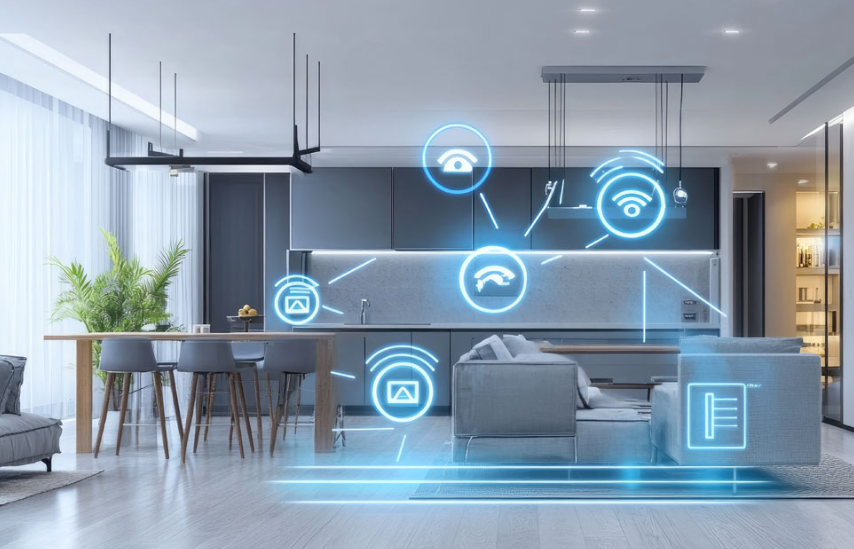
Innovations in connectivity and sensor technology have propelled the integration of Internet of Things (IoT) devices into smart homes.
Key developments include AI assistants enhancing voice control, energy management systems optimizing resource use, and advanced security systems ensuring user privacy.
Furthermore, predictive analytics and interoperability standards improve device compatibility, fostering seamless integration and offering users greater autonomy in managing their smart environments.
Challenges and Concerns in Smart Home Adoption
What barriers hinder the widespread adoption of smart home technologies?
Privacy concerns and security vulnerabilities often breed user skepticism, while interoperability issues complicate device integration.
Additionally, high costs and technological complexity deter potential adopters.
Data ownership remains ambiguous, creating further hesitation.
Finally, increased energy consumption raises environmental questions, making it essential for developers to address these challenges to foster greater acceptance and trust in smart homes.
See also: Blockchain Technology in Healthcare: A Game Changer?
The Future Landscape of Home Automation
While the adoption of smart home technologies has faced notable challenges, the future landscape of home automation promises significant advancements that could reshape how individuals interact with their living spaces.
Enhanced energy efficiency and intuitive user experiences will likely become cornerstones of this evolution, empowering homeowners to control their environments seamlessly.
This transformation may ultimately foster a more sustainable and personalized living experience, promoting individual freedom.
Conclusion
As the dawn of smart homes and IoT devices approaches, a tapestry of innovation weaves together convenience and sustainability. Homeowners stand on the precipice of a revolution, where technology not only transforms living spaces but also harmonizes with nature. Yet, like a double-edged sword, the promise of connectivity brings forth challenges of privacy and interoperability. Navigating these complexities will determine if this brave new world flourishes, ultimately crafting a future where homes breathe alongside their inhabitants.