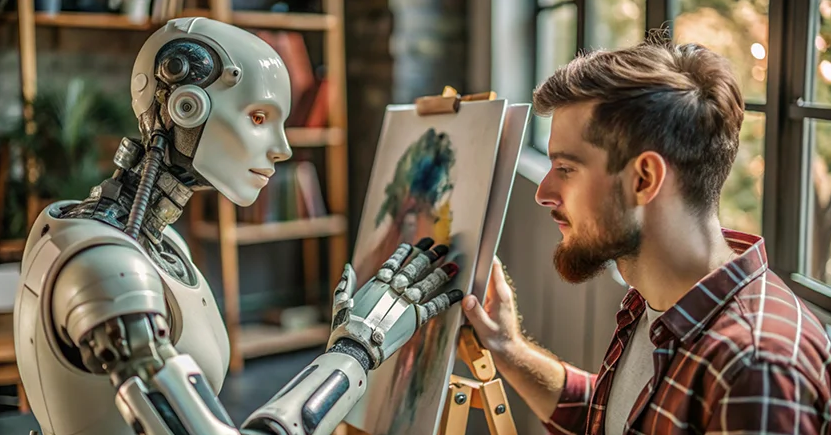
Can AI Replace Human Creativity? A Deep Dive
The discussion around AI’s capacity to replace human creativity has gained momentum in recent years. Advancements in algorithms and machine learning have enabled machines to produce art, music, and literature. However, a critical examination reveals significant limitations inherent in AI’s creative output. These nuances prompt an inquiry into what truly defines creativity. As technology evolves, the implications for artistic expression and collaboration with AI warrant further exploration. What does this mean for the future of creativity?
The Evolution of AI in Creative Fields
As technology advanced, the integration of artificial intelligence into creative fields began to reshape traditional artistic practices and redefine the boundaries of creativity.
AI advancements have fostered the development of creative algorithms that facilitate artistic collaboration between humans and machines.
Understanding the Limitations of AI Creativity
While AI has opened new avenues for artistic exploration, it is important to recognize the inherent limitations of AI in the realm of creativity.
Algorithmic limitations restrict AI’s ability to generate works infused with emotional depth, often resulting in outputs that lack authenticity.
Consequently, while AI can mimic styles and techniques, it struggles to capture the nuanced complexity of human experiences and emotions.
See also: Blockchain Technology: A Beginner’s Guide
The Unique Aspects of Human Artistic Expression
Creativity is a profoundly human endeavor, characterized by an intricate interplay of emotions, experiences, and cultural contexts.
Human artistic expression embodies emotional depth, allowing creators to channel personal narratives and societal influences into their work.
This unique ability to reflect and respond to diverse cultural contexts enriches art, fostering connections that resonate on a deeply personal level, distinguishing it from mere algorithmic outputs.
The Future of Creativity: Collaboration or Competition?
The intersection of artificial intelligence and human creativity is increasingly shaping the discourse around the future of artistic expression, raising critical questions about whether this relationship will foster collaboration or breed competition.
Collaborative projects may emerge as a new frontier, where creative partnerships between humans and AI enhance innovation.
Conversely, competition might arise, prompting concerns about originality and the essence of artistic integrity.
Conclusion
In conclusion, while AI’s capabilities in creative domains continue to advance, it remains a mere tool in the artist’s toolbox, akin to a quill pen in the hands of a Renaissance master. The emotional resonance and cultural context embedded in human creativity are irreplaceable. Rather than viewing AI as a competitor, society should embrace a collaborative future, where the fusion of human artistry and machine innovation redefines creativity, leading to unprecedented artistic expressions and deeper cultural dialogues.